Feng shui bedroom layout: see what to move from one photo
Upload a photograph of your bedroom to check its current feng shui layout. LuckMove marks where the bed, door, window or mirror needs attention and explains what to move, where to put it and what comes first. For a small bedroom, start with support behind the bed and a clear route through the room.
Show where your bed stands.
No need to know feng shui. Include the bed, its headboard wall and the window. LuckMove will mark the places to move and the order to follow.
Bed fits only one wall? Mirrored closet doors that stay? Photograph it as it is. The fixes work around what cannot move.
- 1One photo, as it is
- 2Every spot circled
- 3What to move
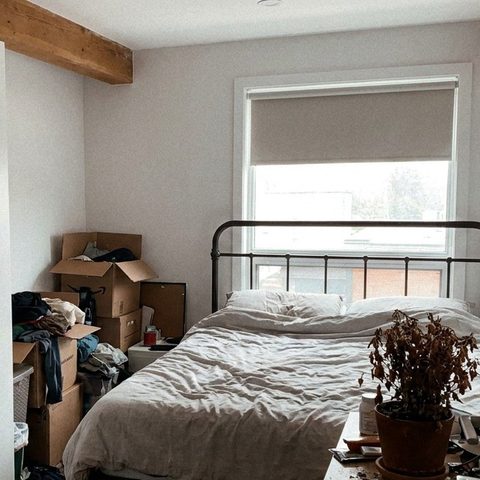 AS IT IS
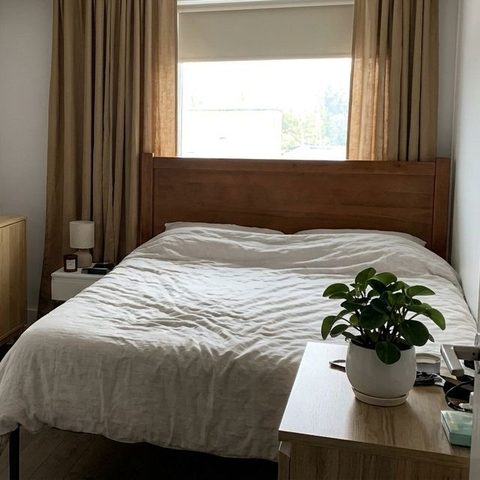 FENG SHUI FIXES
Show where your bed stands.
No need to know feng shui. Include the bed, its headboard wall and the window. LuckMove will mark the places to move and the order to follow.
Bed fits only one wall? Mirrored closet doors that stay? Photograph it as it is. The fixes work around what cannot move.
- 1One photo, as it is
- 2Every spot circled
- 3What to move
AS IT ISFENG SHUI FIXESThat file doesn’t look like a photo. Choose a JPG or PNG of your bedroom.
This iPhone photo (HEIC) won’t open in this browser. Send it from your phone, or save it as JPG first.
Tonight, at home: one photo of the bedroom.
Tomorrow, at home: one photo of the bedroom.
Link copied. Paste it into a note or a message to yourself.
A layout starts with the room you have
If you came looking for a feng shui bedroom layout generator, begin with a photograph of the arrangement you live with. LuckMove checks that arrangement and shows a possible after-view. It is not a floor plan drawn to scale: keep the real door swing, furniture sizes and walking space in mind before moving anything.
The wall behind the bed comes first
Look for an unbroken wall at the head of the bed. Among the solid walls, prefer one where you can see the bedroom door at an angle. Feng shui calls this a position with support behind and open ground before it. The bed-placement guide gives the same order: wall, then door, then balance on the two sides.
When the door points at the bed
A bed directly in the door’s line lies in the path of incoming chi. Move it sideways out of that line while keeping the head supported. If it cannot move, the bed-facing-door guide shows how a screen can soften the direct path where there is enough room; it must not close off the route into the bedroom.
When the window is behind the pillows
A window gives the head of the bed an opening where feng shui asks for shelter. Move the headboard to a solid wall if the room allows it. Where the window must stay behind you, the bed-under-window guide pairs a solid headboard above pillow height with substantial curtains closed at night.
A mirror across from the bed
From the pillow, check whether the mirror reflects the bed. If it does, rotate or move the mirror so it no longer catches the sleeper. If it is fixed in place, cover its reflective surface at night. The mirror-facing-bed guide explains why the tradition keeps a moving reflection out of the place of rest.
A small bedroom needs a clear order
Keep the head of the bed supported before chasing equal space on both sides. Clear the route from the door and remove furniture that blocks it. If two matching nightstands would crowd the bed, leave the passage open rather than forcing symmetry. Do not add a screen where it would make the only walkway narrower.
Before buying anything, send the present arrangement for a check. Mention what cannot move in the follow-up. Once the bed and passages are settled, bedroom colors can soften the large surfaces without adding another object to a tight room.
Questions people ask
Stand in the doorway or a corner of the room. Include the bed, the wall behind its headboard and a door or window in the same photograph.
Keep the bed in the workable position and consider a solid headboard with curtains at night. Keep access to the window and the room’s passage clear; explain any fixed constraint in the follow-up.
Begin with the room’s form: support, door line and usable space. A preferred direction does not make an unsupported headboard or blocked passage a good arrangement.